How long TPO roofing lasts
A key question for any Beech Grove owner considering TPO is how long it lasts, and understanding its typical lifespan and what affects it helps set expectations and plan. TPO offers a solid service life when installed and maintained well.
Typical service life
A quality TPO roof, properly installed and maintained, commonly lasts past twenty years, with thicker membranes and good care reaching the higher end of the range. This is a dependable service life for a commercial membrane, comparable to other single ply systems. For a building, a TPO roof that reaches or exceeds twenty years represents good value, and the membrane is designed to deliver that kind of longevity under normal conditions when treated right.
How membrane thickness affects lifespan
TPO comes in different thicknesses, and a thicker membrane generally lasts longer and resists punctures, hail, and weathering better, which can push the lifespan toward the higher end. A thinner membrane lowers cost but also expected life. For a Marion County roof, choosing an appropriate thickness for the building's exposure and traffic is a way to influence how long the TPO lasts, with thicker membranes worth considering where durability and longevity matter most.
The role of installation and maintenance
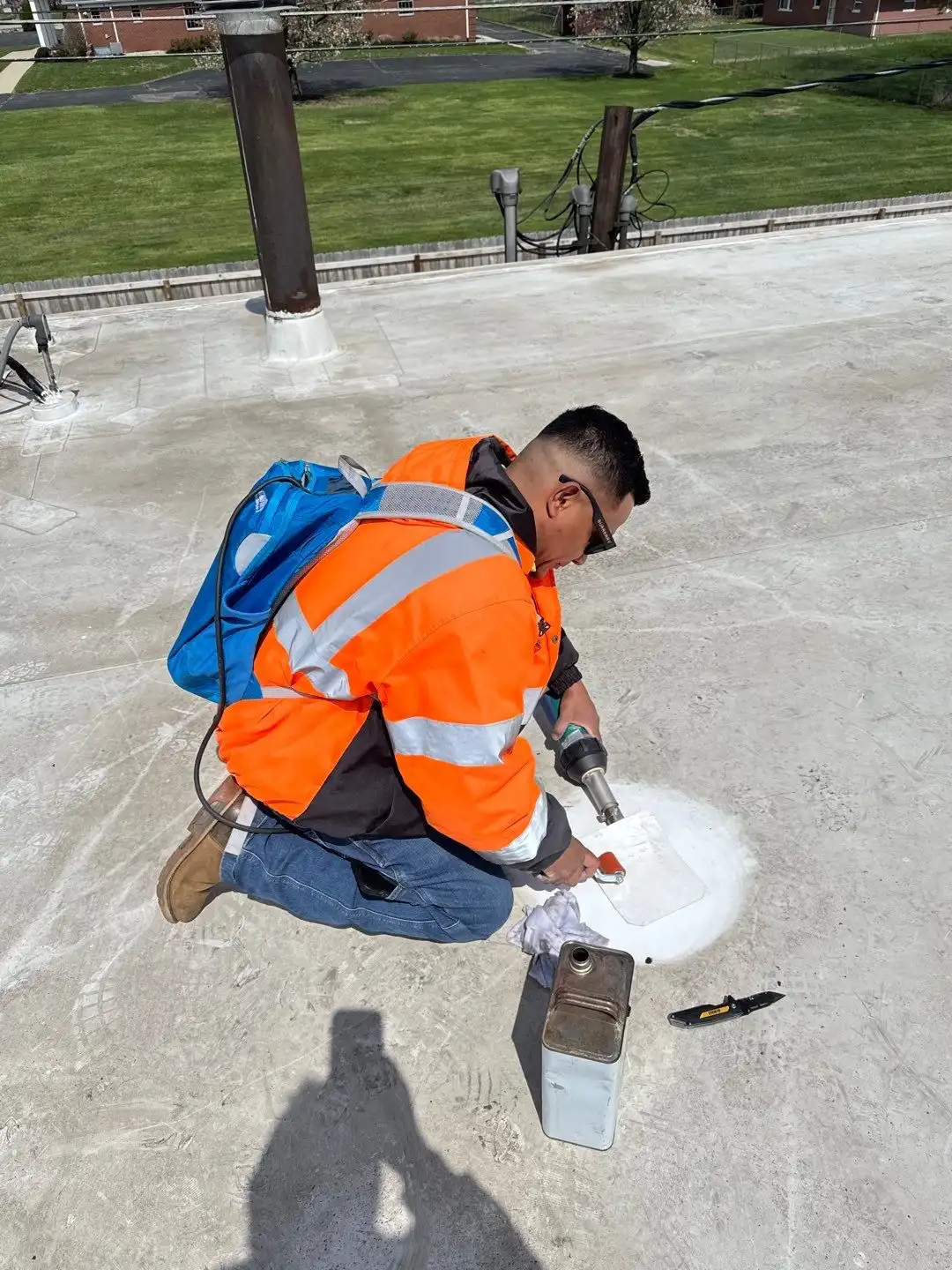
Installation quality and maintenance heavily affect how long a TPO roof actually lasts. A well installed roof with proper welds and detailing reaches its full life, while a poorly installed one fails early. And a maintained roof, with clear drains, regular inspections, and prompt repairs, commonly reaches or exceeds its expected life. For a Beech Grove building, these factors are within the owner's influence and are the most effective ways to get the full lifespan from a TPO roof.
What shortens TPO's life
Several things can shorten a TPO roof's life: poor installation, neglected maintenance, chronic ponding water that stresses the membrane, and heavy unprotected foot traffic. Avoiding these, through quality installation, regular care, good drainage, and traffic protection, helps the roof reach its potential. For a owner, understanding what shortens TPO's life points to how to extend it, since most premature failures trace to these avoidable factors rather than the membrane itself.
Getting the full lifespan
TPO commonly lasts past twenty years, and reaching or exceeding that depends on the membrane thickness, the installation quality, and the maintenance, factors largely within an owner's control. A Marion County owner who chooses an appropriate membrane, a skilled installer, and a maintenance routine gives the TPO roof its best chance at a long life. Understanding the lifespan and its drivers is what lets an owner plan and maximize the roof's service.
Maximize your TPO roof's lifespan
Finally, whether TPO is the right choice comes down to the building, since the most popular membrane is not automatically the best for every roof. A owner who weighs TPO's strengths against the building's actual exposure and needs, and compares it honestly to the alternatives, makes a better decision than one who picks TPO simply because it is common. The membrane that fits the building is the right one, and understanding TPO is what lets an owner judge whether it is that membrane for their roof.
It also helps to remember that with TPO, more than with some systems, the installation determines the outcome, because the membrane's potential depends on properly welded seams and careful detailing. A Marion County owner who prioritizes a skilled, experienced installer gets the full value TPO can offer, while one who chooses purely on price may get a membrane that fails early through poor welds. Understanding that the installation matters as much as the membrane is among the most useful things an owner can take from learning about TPO.
The broader point about understanding TPO is that knowing what a membrane is and how it works lets an owner make a roofing decision rather than simply accept the default. A Beech Grove owner who understands TPO's reflective surface, welded seams, lifespan, and cost can judge whether it fits the building, ask the right questions of a contractor, and recognize a quality installation from a rushed one. That understanding turns the most common membrane from a label into a choice the owner can evaluate on its merits.
Finally, whether TPO is the right choice comes down to the building, since the most popular membrane is not automatically the best for every roof. A owner who weighs TPO's strengths against the building's actual exposure and needs, and compares it honestly to the alternatives, makes a better decision than one who picks TPO simply because it is common. The membrane that fits the building is the right one, and understanding TPO is what lets an owner judge whether it is that membrane for their roof.
It also helps to remember that with TPO, more than with some systems, the installation determines the outcome, because the membrane's potential depends on properly welded seams and careful detailing. A Marion County owner who prioritizes a skilled, experienced installer gets the full value TPO can offer, while one who chooses purely on price may get a membrane that fails early through poor welds. Understanding that the installation matters as much as the membrane is among the most useful things an owner can take from learning about TPO.
The broader point about understanding TPO is that knowing what a membrane is and how it works lets an owner make a roofing decision rather than simply accept the default. A Beech Grove owner who understands TPO's reflective surface, welded seams, lifespan, and cost can judge whether it fits the building, ask the right questions of a contractor, and recognize a quality installation from a rushed one. That understanding turns the most common membrane from a label into a choice the owner can evaluate on its merits.
Finally, whether TPO is the right choice comes down to the building, since the most popular membrane is not automatically the best for every roof. A owner who weighs TPO's strengths against the building's actual exposure and needs, and compares it honestly to the alternatives, makes a better decision than one who picks TPO simply because it is common. The membrane that fits the building is the right one, and understanding TPO is what lets an owner judge whether it is that membrane for their roof.
It also helps to remember that with TPO, more than with some systems, the installation determines the outcome, because the membrane's potential depends on properly welded seams and careful detailing. A Marion County owner who prioritizes a skilled, experienced installer gets the full value TPO can offer, while one who chooses purely on price may get a membrane that fails early through poor welds. Understanding that the installation matters as much as the membrane is among the most useful things an owner can take from learning about TPO.
Beech Grove Commercial Roofing installs and maintains Beech Grove TPO roofs to reach their full lifespan, with quality installation and maintenance plans. Call (765) 676-3491 to get the most years from your TPO roof. Quality installation and care are what separate a roof that lasts from one that fails early.